Southwest Florida coastal environments host intense insect pressure, where carpenter bees burrow half-inch entry holes into untreated cypress soffits, cedar pergolas, and pressure-treated dock timbers. In neighborhoods…
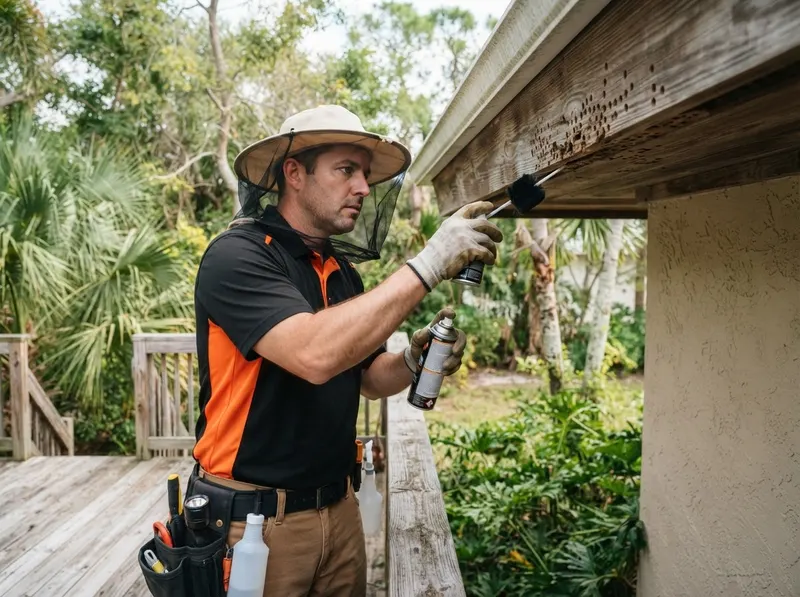
Southwest Florida coastal environments host intense insect pressure, where carpenter bees burrow half-inch entry holes into untreated cypress soffits, cedar pergolas, and pressure-treated dock timbers. In neighborhoods such as Port Royal, Aqualane Shores, and Old Naples, carpenter bees bypass surface paint to carve internal galleries along the grain, leaving yellow frass stains across outdoor travertine pavers and weakening structural framing over successive seasons. Stinging paper wasps and mud daubers simultaneously exploit the sheltered anchor channels of screen lanais, outdoor range hoods, and pool equipment enclosures in communities like Pelican Bay, Park Shore, and The Moorings. Unaddressed carpenter bee tunnels attract woodpeckers that chisel open wood members to reach larvae, multiplying the initial exterior damage tenfold.
Selecting a localized extraction protocol fits properties showing active flight activity, bored entry holes, or suspended comb nests, whereas general perimeter barrier sprays only address ground-crawling pests and leave wood-boring larvae intact inside the framing. Treating stinging insects in elevated soffits requires aerosolized micro-dust formulations directed precisely into the gallery openings rather than broadcast liquid spraying, which prevents staining high-end tongue-and-groove ceilings, motorized storm shutters, or custom architectural stonework. For inland acreage in Golden Gate Estates or golf course residences in Tiburon and Lely Resort, high-clearance ladders and pole-injected botanical residuals isolate stinging hazards around rooflines and pool screen superstructures without exposing family pets or lanai water features to broad chemical drift.
Preventative sealing follows insect evacuation, where technicians plug active carpenter bee boreholes with fitted dowels or copper mesh and seal them with exterior silicone to halt re-infestation. A single carpenter bee gallery frequently measures 6 to 10 inches in depth and houses up to 8 individual larval chambers, requiring direct gallery treatment rather than a surface wash. Properties bordering dense mangrove corridors or nature reserves like Clam Pass Park and the Gordon River Greenway encounter heightened stinging insect swarms between March and October, making seasonal eaves inspections essential to preserve architectural integrity.
Every job gets a firm, written price after a free on-site visit.
Tell us about your carpenter bee and stinging insect removal job in Naples and we'll send a clear, written quote, usually the same day.
 Old Hickory Pest Control